Creatine: the complete guide to muscles, brain, and blood values
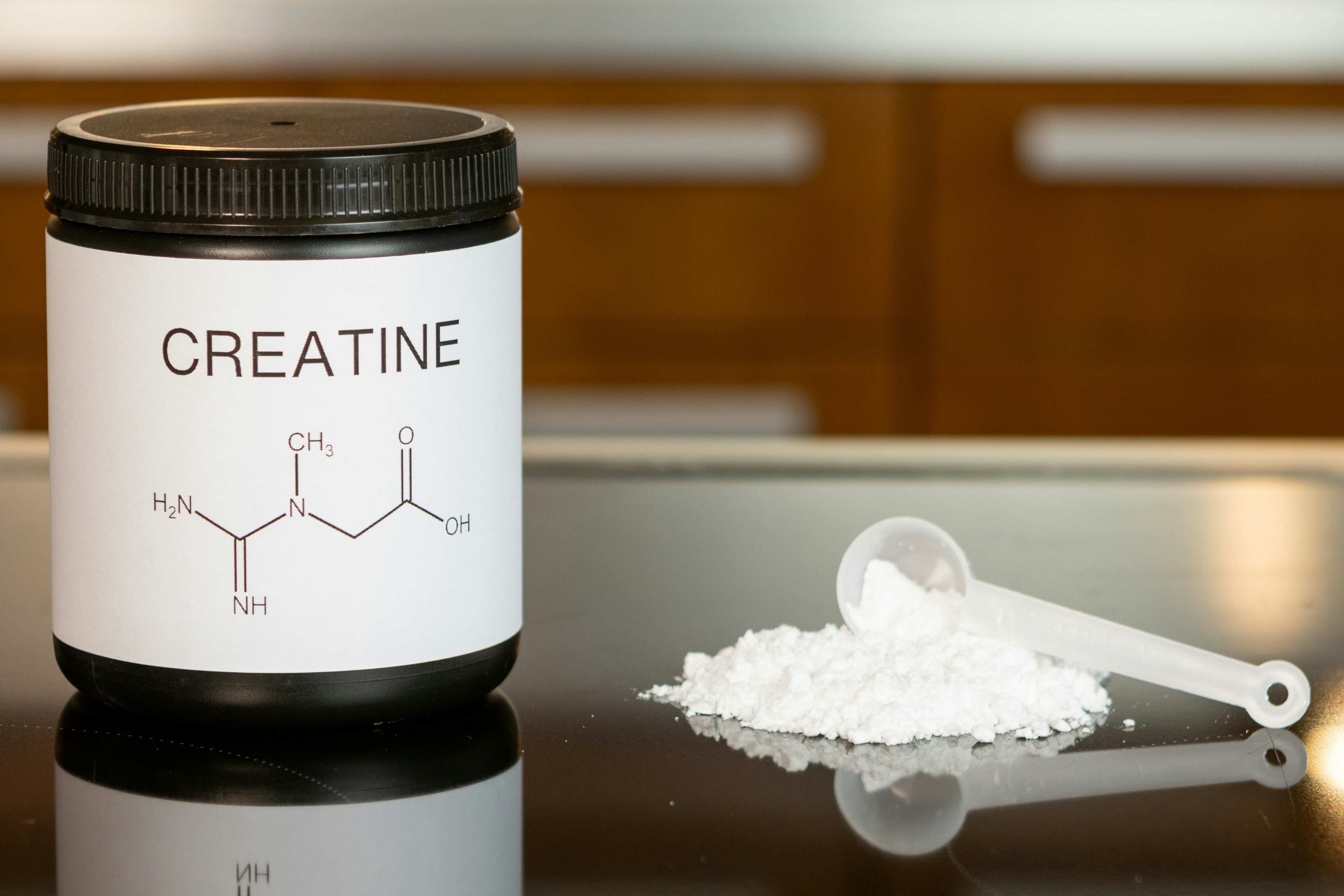
Creatine is the most researched supplement in the world, but at the same time one of the most misunderstood. Most people think of strength training and muscle mass, but the reality is much more interesting. Creatine is a natural compound that your body produces itself and that acts as a fast energy reservoir: not only in your muscles, but also in your brain. Research shows that creatine improves muscle strength, supports brain function, stabilizes blood sugar, and can inhibit muscle breakdown due to aging.
Summary
What does creatine do in the body?
Creatine is a substance that your body produces itself from amino acids. Additionally, you ingest small amounts through food, such as meat and fish. The majority of creatine is stored in your muscles, where it helps to quickly release energy during short, intense bursts of activity, such as weight training, sprinting, or jumping.
Creatine acts as a kind of fast energy reserve. When your muscles need a lot of energy in a short time, creatine helps to rapidly replenish your cells' main energy source (ATP). This allows your muscles to deliver maximum power for longer and reduces fatigue.
But creatine is not only important for your muscles. Your brain also uses creatine to make energy available quickly. Research shows that creatine supplementation can support mental performance, especially in situations where energy demands are high, such as sleep deprivation, prolonged mental exertion, or stress. Some studies show improvements in concentration, memory, and mental alertness, among other things.
Creatine and creatinine: not the same, but related
A common mistake is confusing creatine with creatinine. They are two different things:
- Creatine is the active energy substance that fuels your muscles and brain.
- Creatinine is the waste product formed when creatine is broken down. It is filtered through the kidneys and excreted through the urine.
Creatinine is a widely used blood marker for kidney function. An elevated creatinine level does not mean that you have too much creatine. In fact, it may indicate that your kidneys are filtering less effectively. That being said: creatine supplementation can temporarily increase creatinine levels, which in most cases is harmless to healthy people.
Reference values for creatinine (S-creatinine):
Group Reference value:
Women approx. 45–90 µmol/L
Men approx. 60–105 µmol/L
Values may vary slightly by laboratory.
What does the research say? Six proven benefits
Creatine has been the subject of hundreds of clinical studies. These are the most robust findings:
1. More muscle strength and muscle mass
Most studies show a 10–20% improvement in strength and explosiveness in people who combine creatine with strength training. The muscles store more energy, allowing you to do more repetitions and recover faster.
2. Improved brain function
A meta-analysis of 16 studies concluded that creatine significantly improves short-term memory, working memory load, and visual attention. The effects are strongest in people under high cognitive pressure, vegetarians, and women.
3. Support for depression
There is growing evidence that creatine can enhance the effects of antidepressants. In studies with women using SSRIs, faster and stronger improvements were observed when creatine was added.
4. Blood sugar stabilisation
Newer research points to a positive effect on insulin sensitivity and glucose uptake by muscles. This is potentially interesting for people who want to support their metabolism.
5. Protection against muscle breakdown during aging
Studies in postmenopausal women show that creatine combined with strength training preserves muscle mass and bone density better than training alone.
6. Brain Protection
Preliminary studies show that creatine may improve recovery capacity after traumatic brain injury. The research is promising but still in an early stage.
Creatine for women: what is different?
Women naturally have lower creatine levels than men due to lower average muscle mass, less meat in the diet, and hormonal differences. This makes supplementation particularly relevant for women.
Specific situations where creatine is particularly interesting for women:
- During menopause and the transition period: Declining estrogen levels accelerate muscle breakdown and can cause brain fog, mood swings, and sleep problems. Creatine supports both muscle mass and brain energy during this phase.
- For mental fatigue or depressive symptoms: the combination with regular treatment shows promising results in clinical research.
- For vegetarian or vegan diets: because creatine is mainly found in meat and fish, vegetarians and vegans often have lower creatine stores. Consequently, supplementation often has a greater effect on them.
Creatine monohydrate: the gold standard
There are dozens of variants of creatine on the market, but the scientific evidence is based almost exclusively on creatine monohydrate: the most stable and best absorbable form. Other variants such as creatine HCL or buffered creatine offer no demonstrable added value for most people.
Creatine monohydrate simply consists of creatine bound to a water molecule. It dissolves well in water, is stable at room temperature, and has been extensively tested for safety during long-term use.
Dosage: how much and when?
The most evidence-based approach:
- How much creatine per day? The maintenance dosage is 3–5 grams per day, daily, even on non-training days.
- Loading phase (optional): a period of 5 to 7 days during which you temporarily take a higher dose of creatine (approximately 20 grams per day). This allows the creatine stores in your muscles to be replenished more quickly. After that, 3 to 5 grams per day is sufficient. A loading phase is not mandatory.
- When is the best time to take creatine? Timing is less important than consistency. After training with a meal, creatine is absorbed slightly better thanks to the insulin response, but the timing has little influence on the final result.
There is no demonstrable benefit at doses higher than 5 grams per day.
Side effects of creatine: what can you expect?
Creatine is one of the safest supplements studied. At normal dosages, there are no proven negative long-term effects in healthy people. What some people do notice:
- Slight weight gain (1–2 kg): due to extra fluid retention in the muscle cells, not due to fat gain.
- Stomach upset at high doses: can be prevented by spreading the dose or taking it with food.
- Elevated creatinine in blood test: temporary and harmless, but can complicate the interpretation of kidney values. Inform your doctor if you are using supplements.
In case of known kidney problems, it is recommended to use creatine only under medical supervision.
When to have blood levels measured?
Is creatine bad for your kidneys? In healthy people, there is no evidence that creatine damages the kidneys. Nevertheless, it is wise to have your kidney function checked occasionally, especially if you want to know preventively how your kidneys process the extra metabolism.
The most important value for this is the eGFR: a calculation that indicates how well your kidneys filter waste products from your blood, corrected for your age and gender, among other things.
The eGFR is calculated based on creatinine, a waste product released during the breakdown of creatine in your muscles. The more muscle mass you have and the more creatine you supplement, the more creatinine you naturally produce. A higher creatinine value in isolation therefore says little: it could simply be the result of your muscle mass and supplementation, without anything being wrong with your kidneys.
The eGFR calculation does assume an average muscle mass for your age and gender. Do you actually have more muscle mass than average due to long-term strength training and creatine use? Then your eGFR may appear slightly lower than your actual kidney function. That, too, is no reason for panic in itself.
What matters is the trend over time. Does your eGFR remain stable with repeated measurements, even if the absolute value is just below the standard value? Then that does not indicate kidney damage. If your eGFR drops significantly compared to a previous measurement, then that is indeed a signal to consult a doctor.
Therefore, preferably have measurements taken twice: once before you start supplementation, and again after three to six months. That comparison tells you more than a single measurement on its own; you can see whether your kidneys continue to process the extra creatine metabolism properly.
Conclusion
Creatine is much more than a sports supplement. It is one of the best-researched substances in the world for both physical performance and brain health, with particular relevance for women, people going through menopause, and anyone looking to slow the cognitive and physical effects of aging.
The message is simple: 3–5 grams of creatine monohydrate per day, taken consistently, is safe, effective, and affordable. Do you want to be sure that your kidneys are processing the supplementation properly? A simple blood test for creatinine and eGFR gives you a clear picture in one go.
Frequently asked questions
Which creatine is the best?
For virtually everyone, creatine monohydrate is the best choice. It is the form with which all convincing research has been conducted, dissolves well, and is by far the cheapest. More expensive variants such as creatine HCL or buffered creatine sound more advanced, but offer no demonstrable advantage over regular monohydrate.
How long does creatine remain good?
Unopened and stored in a dry place, creatine monohydrate remains good for a long time, often even for some time after the expiration date on the packaging. The biggest risk is moisture: if the powder starts to clump or develops a strong, chemical odor, it is best to throw it away. Therefore, store it airtight and in a dry place.
How much creatine per kg of body weight?
The standard recommendation does not take body weight into account: 3-5 grams per day applies to virtually all adults, from small to large. Some researchers dose based on body weight instead, but the difference from the fixed dosage is small in practice.
How much water should you drink when using creatine?
How fast does creatine work?
With a loading phase of 20 grams per day, creatine stores in the muscles are usually saturated within a week, after which the effect on strength and recovery becomes noticeable. Without a loading phase, with the standard dosage of 3-5 grams per day, this takes longer: on average three to four weeks. The end result is the same in both cases, only the pace differs.
Are you allowed to take creatine on the plane?
Yes, creatine is allowed on the plane, both in checked baggage and hand luggage. Powder and capsules are not subject to the liquid rules that apply to hand luggage. If you are traveling with a large quantity of loose powder, preferably take it with you in the original packaging; this will prevent questions at security.
Published: August 7, 2026
Author
The team at zample™
References
- NHG (Nederlands Huisartsen Genootschap). Chronische nierschade.. 2026 . https://richtlijnen.nhg.org/standaarden/chronische-nierschade
- de Souza Almeida A, da Silva LOD, Takahasi BNA, Terada BD, Gonçalves FGA, Porto BC, da Silva Sardenberg RA, Passerotti CC, Maia RS, Samaan F, Thoman M, Molina WR, Shiomi da Cruz JA.. Impact of creatine supplementation on kidney health: a systematic review and meta-analysis. 2026 . https://pubmed.ncbi.nlm.nih.gov/42507286/
- Naddafha S, Antonio J, Kreider RB, Stout JR. (Journal of the International Society of Sports Nutrition). Creatine monohydrate for lean mass, strength, and bone density in postmenopausal women: a systematic review and meta-analysis. 2026 . https://pubmed.ncbi.nlm.nih.gov/42141930/
- Gordji-Nejad A, Matusch A, Hengstler L, Beer S, Kroll T, Klein S, Elmenhorst D, Bauer A, Drzezga A. (Nutrients). Single-Dose Creatine Reduces Sleep Deprivation-Induced Deterioration in Cognitive Performance. 2026 . https://pubmed.ncbi.nlm.nih.gov/42075005/
- Jeryous Fares B, Zhou C, Fabiano N, Wong S, Stubbs B, Shorr R, Puder D, Candow DG, Ostojic SM, Solmi M. (Canadian Journal of Psychiatry). The Effect of Creatine Monohydrate on Mental Disorders: A Systematic Review of Randomized Controlled Trials. 2026 . https://pubmed.ncbi.nlm.nih.gov/41558805/