Platelets too high: causes, symptoms, and what your result means
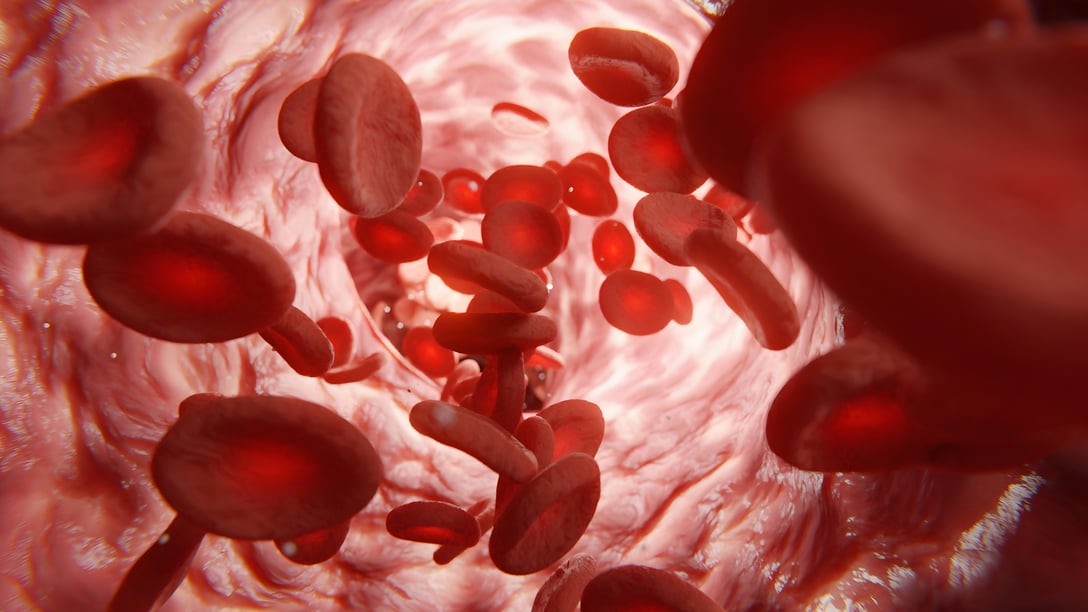
Are your platelets too high? Then you have more platelets in your blood than normal. Usually, this is your body's reaction to something else, such as an infection, inflammation, or an iron deficiency. The number will then drop again once the cause is gone. A blood disease as the cause is rare.
Summary
What are thrombocytes?
Thrombocytes is the medical word for platelets. They are small cell fragments in your blood that help stop bleeding. If you have a small wound, the platelets attach to the damaged blood vessel wall and to each other. In doing so, they form an initial clot that helps stop the bleeding. At the same time, blood clotting is initiated, resulting in a firmer clot.
Platelets are produced in your bone marrow, the soft tissue inside your bones. They originate from large precursor cells called megakaryocytes. Platelets live for an average of 7 to 10 days. After that, they are mainly broken down in your spleen and liver. Your bone marrow continuously produces new platelets.
When are your thrombocytes too high?
The number of platelets is expressed in billions per liter of blood. In adults, the reference value is usually between 150 and 450 × 10⁹ per liter. Some laboratories use an upper limit of 400 × 10⁹ per liter. That corresponds to 150 to 450 billion platelets per liter of blood.
If your count is above the laboratory's upper limit, this indicates an elevated platelet count. Doctors usually use a threshold of more than 450 × 10⁹ per liter for the medical term thrombocytosis.
A single, slightly elevated result does not immediately mean that you have a condition. The platelet count can rise temporarily, for example due to an infection or inflammation. Therefore, the blood test is often repeated after some time. If the count remains elevated, your doctor will investigate the cause.
What are the causes of high platelets?
Doctors distinguish between two main forms of thrombocytosis.
Reactive thrombocytosis (secondary thrombocytosis)
This is the most common form. Your bone marrow produces extra platelets in response to another condition or event in your body.
Possible causes include:
- An infection, such as pneumonia or another bacterial infection.
- An inflammatory disease, such as rheumatoid arthritis or chronic inflammatory bowel disease, for example Crohn's disease.
- An iron deficiency, with or without anemia. Iron deficiency is an important and common cause of an elevated platelet count.
- Blood loss, for example due to bleeding in your stomach or intestines or heavy menstruation.
- Surgery, injury, or other tissue damage.
- Removal of your spleen or a spleen that does not function properly. The spleen plays a role in removing platelets from the bloodstream.
- Certain medications. Some medicines can affect the platelet count.
- Cancer. Sometimes the body reacts to cancer by producing extra platelets.
In reactive thrombocytosis, the increase is therefore a reaction to something else in your body. If the underlying cause disappears or is treated, the platelet count usually decreases again.
Primary thrombocytosis (clonal thrombocytosis)
This form is much rarer. The bone marrow then independently produces too many platelets due to an abnormality in the blood-forming cells. This occurs in certain bone marrow diseases, also known as myeloproliferative disorders.
Examples are:
- Essential thrombocythemia (ET).
- Polycythaemia vera (PV).
- Chronic myeloid leukemia (CML).
In essential thrombocythemia, the bone marrow primarily produces too many platelets. In polycythaemia vera, the production of red blood cells is mainly increased, but platelets may also be elevated. In chronic myeloid leukemia, there is an abnormal production of various types of white blood cells.
Sometimes the platelet count appears higher than it actually is. This can happen if an automated measuring device incorrectly counts other small particles in the blood as platelets. A blood smear can help check this.
High platelet count: symptoms
An elevated platelet count usually causes no symptoms itself. With reactive thrombocytosis, you mainly notice the underlying cause. Think, for example, of fever with an infection, joint complaints with rheumatism, or fatigue with anemia.
An elevated platelet count is often discovered incidentally during a blood test.
In primary thrombocytosis, such as essential thrombocythemia, symptoms can occur. The platelets can then also function abnormally. This can increase the risk of blood clots. At very high levels, the risk of bleeding can actually increase.
Possible symptoms include:
- Tingling or a burning pain in your fingers or toes, sometimes with a red-blue discoloration.
- Headache.
- Dizziness or vision problems.
- Itching.
- Fatigue.
- A blood clot (thrombosis) in a vein or artery.
- Bleeding, such as frequent nosebleeds or bleeding gums.
These symptoms are not specific. Headaches, itching, and fatigue, for example, also occur in many other conditions.
Leukocytes and platelets both too high
Are both your white blood cells (leukocytes) and your platelets elevated? This can be consistent with an infection or inflammation. Your body then produces extra immune cells and may also produce extra platelets. If the infection or inflammation subsides, both values usually decrease again.
If both values remain elevated without a clear explanation, your doctor may conduct further investigations. Sometimes there is a bone marrow disorder in which the production of various types of blood cells is disrupted.
A combination of an elevated platelet count and an abnormal hemoglobin value can also warrant further investigation.
Can a high platelet count indicate cancer?
Usually not. The most common causes of an elevated platelet count are infections, inflammation, and iron deficiency. However, thrombocytosis can sometimes be an indication of cancer.
A 2017 English study investigated the link between an elevated platelet count and the development of cancer in people aged 40 and older. Within a year of the elevated result, cancer was diagnosed in 11.6% of men and 6.2% of women. In people with a normal platelet count, these percentages were 4.1% and 2.2%, respectively.
With a second elevated measurement within six months, the percentage was higher: 18.1% in men and 10.1% in women. Lung cancer and colon cancer occurred relatively frequently.
These are research results from English primary care. The percentages are not a personal prediction of your risk of cancer and cannot be directly extrapolated to every Dutch patient. Moreover, people undergoing blood tests do not have the same background as the general population.
Therefore, an elevated platelet count does not mean that you have cancer. However, it is important that your doctor investigates a persistent elevation and takes into account your age, other blood values, and any symptoms.
Symptoms include unintentional weight loss, persistent coughing, blood in your stool, or a permanent change in your bowel habits. Discuss such symptoms with your GP.
Is a high platelet count dangerous?
That depends mainly on the cause.
In reactive thrombocytosis, the elevated platelet count itself is usually not dangerous. The risk is mainly associated with the underlying condition. If that is treated or resolves, the platelet count usually decreases on its own.
In primary thrombocytosis, such as essential thrombocythemia, the risk of blood clots may be higher. A blood clot can block a blood vessel, for example in your legs, lungs, heart, or brain. Bleeding can also occur with very high platelet counts.
Your doctor will therefore assess the risk of thrombosis and bleeding. Factors such as your age, any previous thrombosis, other risk factors, and the platelet count level play a role in this assessment.
In essential thrombocythemia, you will be managed by a hematologist, a specialist in blood diseases. In addition, smoking increases the risk of cardiovascular disease and can further increase the risk of thrombosis.
What happens after a result that is too high?
If a blood test shows that your platelets are elevated, your doctor will investigate the cause. This usually happens in several steps.
1. Questions and physical examination
For example, your doctor will ask if you have recently had an infection or surgery, if you have lost blood, and if you have an inflammatory disease. The doctor will also discuss your medication use and any other symptoms.
2. Repeating the blood test
The blood test is often repeated after a few weeks. This allows your doctor to see whether the elevation was temporary or persists. The right time depends on the level of the value and the suspected cause.
3. Additional blood tests
Your doctor may request various additional tests, such as:
- Hemoglobin (Hb), to check if you have anemia.
- Ferritin, to assess your iron stores.
- CRP, a blood value that can rise during inflammation.
- A blood smear, in which the shape and characteristics of your blood cells are examined under a microscope.
4. Possible referral to a hematologist
If the platelet count remains elevated without a clear cause, your GP may refer you to a hematologist.
This specialist can investigate whether there is a bone marrow disorder. This can be done, for example, with DNA testing for specific gene changes, such as JAK2, CALR, and MPL. Sometimes, a bone marrow examination is also necessary.
Treatment of elevated platelets
Treatment depends on the cause of the elevation.
In reactive thrombocytosis
Treatment focuses on the underlying cause. This includes treating an infection or inflammation, or supplementing an iron deficiency. If the cause disappears, the platelet count usually decreases spontaneously.
Medications to directly lower platelets are usually not necessary in reactive thrombocytosis. Nor is aspirin routinely prescribed to treat the elevated platelet count.
In primary thrombocytosis
In essential thrombocythemia, treatment depends on the risk of thrombosis and bleeding. Not everyone requires medication immediately.
Some patients receive a low dose of acetylsalicylic acid (aspirin). This inhibits the action of platelets, making them less likely to stick together and potentially reducing the risk of certain blood clots.
In patients at higher risk, medication that inhibits the production of platelets in the bone marrow may also be necessary.
In contrast, very high platelet counts can actually lead to an increased risk of bleeding. This is because the function of certain clotting proteins can be disrupted. In that situation, aspirin may be unsuitable.
The treatment is therefore always coordinated by a hematologist.
Never start taking aspirin on your own if your platelet count is elevated. Aspirin can also cause bleeding. Always discuss any potential treatment with your doctor.
Have your platelets tested
Do you want to know how your blood values stand? Platelets are measured in all Zample blood tests, including the Essential Blood Test.
In addition, leukocytes, hemoglobin, ferritin, and CRP, among others, are measured. These values can help assess an elevated platelet count in the proper context. For example, they can provide indications of an iron deficiency or inflammation.
A blood test shows whether your platelets fall within the reference range. It does not constitute a diagnosis in itself and cannot always determine the cause of an abnormal value. Therefore, discuss an elevated result with your GP.
When to see the GP?
Make an appointment with your GP if:
- Blood tests show that your platelets are elevated, especially if this remains the case with repeated testing.
- You have other abnormal blood values in addition to elevated platelets, such as abnormal hemoglobin or elevated leukocytes.
- You are losing weight unintentionally, have a persistent cough, have blood in your stool, or suffer from night sweats or fever without a clear cause.
- You have pain, tingling, or a red-blue discoloration in your fingers or toes without a clear reason.
Do you have an elevated platelet count and are you over 40? Then it is especially important that your doctor assesses the result in conjunction with your other blood values and any symptoms. Age alone does not mean there is an increased risk of cancer.
When to seek immediate medical help?
Call 112 for possible signs of a stroke, such as a crooked mouth, sudden loss of strength in an arm or leg, or sudden difficulty speaking. Also call 112 for severe or sudden chest pain, especially if you are short of breath.
Contact your GP or the out-of-hours GP service immediately if you have a swollen, painful, and warm calf, as this could be consistent with deep vein thrombosis. Do the same in case of sudden shortness of breath or pain when breathing. These could be signs of a pulmonary embolism.
Conclusion
Platelets too high mean that you have more platelets in your blood than normal. Usually, this is your body's reaction to an infection, inflammation, iron deficiency, or blood loss. The count typically decreases again when the cause disappears. A bone marrow disorder as a cause is less common.
An elevated result in itself does not indicate what is wrong. Therefore, it is important to assess the result in conjunction with your other blood values, any symptoms, and medical history. Discuss an elevated platelet count with your GP, especially if the value remains elevated upon repeated testing.
Published: October 26, 2026
Author
The team at zample™
Verified by
Dagnery Pikerie, Md
Dagnery Pikerie, Md
References
- Gezondheid en Wetenschap (Cebam). Te veel bloedplaatjes (trombocytose). 2021 . https://www.gezondheidenwetenschap.be/richtlijnen/trombocytose-te-veel-bloedplaatjes
- KWF, kanker.nl. Essentiële trombocytemie (ET). 2026 . https://www.kanker.nl/kankersoorten/mpn-myeloproliferatieve-neoplasmata/soorten/wat-is-essentiele-trombocytemie
- Bailey SER, Ukoumunne OC, Shephard EA, Hamilton W. Clinical relevance of thrombocytosis in primary care: a prospective cohort study of cancer incidence using English electronic medical records and cancer registry data. 2017 . https://doi.org/10.3399/bjgp17x691109
- Sanquin. Bloedplaatjes. 2026 . https://www.sanquin.nl/donors/alles-over-bloed/bloedcellen/bloedplaatjes