Cholesterol: what a high value means and what you can do about it
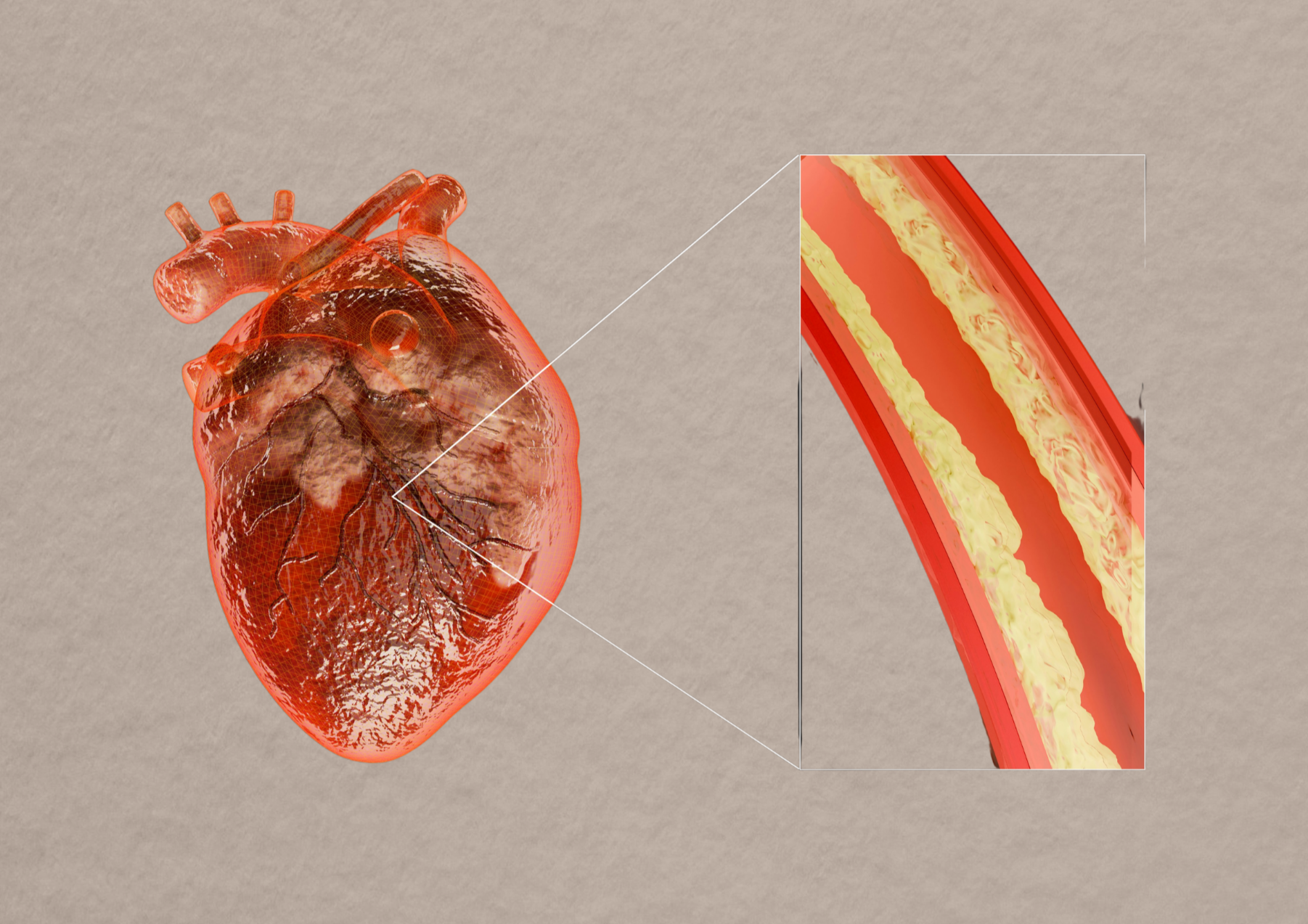
Cholesterol often gets a bad reputation, but your body cannot do without it. The problem only arises when the balance is disrupted: too much of the wrong type of cholesterol, too little of the protective type. High cholesterol levels do not cause any symptoms themselves, which is why many people do not know for years that their blood vessels are suffering.
Summary
What is cholesterol and why do you need it?
Cholesterol is a fatty substance that your body uses to build cell walls, make hormones, and produce bile salts needed for the digestion of fat. Your liver produces most of your cholesterol itself. You get the rest through your diet, especially through animal products such as meat, butter, and cheese.
Because cholesterol is fatty, it does not dissolve on its own in your blood, which consists largely of water. To still be able to travel through your bloodstream, cholesterol is packaged in particles called lipoproteins. These particles determine whether cholesterol has a healthy or a harmful effect, and that brings us to the distinction between LDL and HDL.
LDL and HDL: the difference between "bad" and "good" cholesterol
When a doctor talks about "your cholesterol," it actually refers to a combination of values, not a single number.
LDL-cholesterol is known as the "bad" cholesterol. LDL particles transport cholesterol from the liver to the rest of the body. If there is too much LDL in your blood, it can settle in the walls of your blood vessels. There, it slowly forms plaque, a type of deposit that narrows and hardens vessels. This process is called atherosclerosis and is the main cause of heart attacks and strokes.
HDL-cholesterol does the opposite and is therefore called the "good" cholesterol. HDL particles transport excess cholesterol back to the liver, where it is broken down and leaves the body. A higher HDL value therefore actually protects against atherosclerosis.
In addition, a blood test often also measures triglycerides, another type of fat in your blood that rises especially with a diet high in sugar and alcohol, and total cholesterol, the sum of all cholesterol particles together. Some laboratories also calculate non-HDL cholesterol (total cholesterol minus HDL), a value that is preferred in current guidelines over total cholesterol alone. Previously, the LDL/HDL ratio was often used for this; this is done less frequently nowadays.
Triglycerides: why this value counts separately
Triglycerides are a different type of fat in your blood than cholesterol and serve as an energy reserve for your body. A value below 2 mmol/l is considered healthy. Because triglycerides can fluctuate significantly after a meal, a lab measures this value most reliably on an empty stomach, meaning without having eaten beforehand.
Why you only notice late that your cholesterol is too high
High cholesterol is sometimes called a "silent condition," and rightly so. It almost never causes symptoms. You can feel excellent for years while plaque gradually builds up in your blood vessels. Only when a vessel is severely narrowed, or when plaque breaks loose and completely blocks a blood vessel, do the consequences arise in the form of a heart attack or stroke.
That makes cholesterol different from symptoms you do feel, such as pain or fatigue. The only way to know where you stand is to have your levels measured. Especially with a family history of cardiovascular disease or other risk factors, this is worthwhile, even if you otherwise feel completely healthy.
What causes high cholesterol?
Your cholesterol levels are determined by a combination of heredity, age, hormones, lifestyle, and underlying conditions. Diet plays a role in this, but often differently than is thought.
A common misconception is that a cholesterol-rich diet automatically leads to high blood cholesterol levels. For most people, dietary cholesterol has relatively little influence on LDL cholesterol, because the body produces the majority of cholesterol itself. The composition of your diet is more important: a high intake of saturated fat, in particular, can raise LDL, while replacing it with unsaturated fats can actually lower it.
Genetic predisposition can also play a major role. In familial hypercholesterolemia, LDL is significantly elevated from a young age due to a hereditary abnormality, regardless of a healthy lifestyle. In addition, age, hormonal changes, being overweight, diabetes, an underactive thyroid, and certain medications, among other things, can affect your cholesterol levels.
Are eggs bad for your cholesterol?
Eggs contain relatively high amounts of cholesterol, but that does not automatically mean they significantly raise your cholesterol levels. As described above, dietary cholesterol has only a limited influence on LDL cholesterol in most people.
For most healthy people, one egg a day fits perfectly within a healthy diet and is not associated with a higher risk of cardiovascular disease. In cases of severely elevated LDL or a hereditary condition such as familial hypercholesterolemia, different dietary advice may apply.
What can you do yourself to lower your cholesterol?
- Replace saturated fat with unsaturated fat. Regularly swap butter, full-fat cheese, and red meat for olive oil, nuts, avocado, and fatty fish.
- Eat more fiber. Soluble fibers from sources including oats, legumes, fruit, and vegetables help to eliminate cholesterol through the intestines.
- Exercise regularly. Endurance training such as walking, cycling, or swimming increases protective HDL levels and helps lower LDL.
- Stop smoking. Smoking lowers HDL and damages the vascular wall, which accelerates plaque formation.
- Limit processed foods and alcohol. Both primarily increase triglyceride levels.
- Keep a reach a healthy weight. Overweight negatively affects LDL, HDL, and triglycerides.
For most people, these lifestyle adjustments are the first step. If cholesterol remains too high despite adjustments, a doctor may consider medication, such as statins, which inhibit the production of LDL in the liver.
When is a blood test useful?
Because high cholesterol levels do not cause symptoms, a blood test is the only way to detect it. This is certainly true if you are over 40, going through menopause, smoke, are overweight, exercise little, or have family members with cardiovascular disease at a relatively young age.
The markers total cholesterol, LDL cholesterol, and HDL cholesterol together provide an initial picture of your cholesterol profile. Triglycerides supplements this picture with information about another type of blood fat that is sensitive to diet and alcohol. For a more accurate risk assessment, some laboratories also look at non-HDL cholesterol and the LDL/HDL ratio, which summarize the ratio between harmful and protective cholesterol in a single number. Together, these values provide a more complete picture than total cholesterol alone. A blood test can show where your cholesterol profile currently stands.
What are normal cholesterol levels?
As a rule of thumb for healthy adults: total cholesterol below 5 mmol/l is usually good, and above 8 mmol/l is considered very high. For HDL: above 1 mmol/l is good; the higher, the better.
For LDL, it is slightly different: there is no fixed limit that applies to everyone. In healthy people without increased risk, an LDL below 3 mmol/l is considered acceptable. If you have an increased risk of cardiovascular disease, the GP aims for an LDL below 2.6 mmol/l, and in the case of a previously experienced heart attack or stroke, even below 1.8 mmol/l. What constitutes a "good" LDL value therefore depends on your personal risk profile, not just on the single number.
Non-HDL cholesterol and the cholesterol/HDL ratio
Some laboratories also calculate non-HDL cholesterol and the ratio between total cholesterol and HDL, also known as the cholesterol/HDL ratio. For a long time, both were common methods for assessing the risk of cardiovascular disease alongside LDL alone.
The current NHG guideline for cardiovascular disease no longer uses the cholesterol/HDL ratio, but calculates using non-HDL cholesterol. If you still see this ratio on an older result or in an online calculation tool, it is not necessarily wrong, but it is no longer the standard your GP currently uses. An LDL target value of 1.8 mmol/l corresponds approximately to a non-HDL cholesterol of 2.6 mmol/l, and an LDL target value of 2.6 mmol/l corresponds to a non-HDL of 3.4 mmol/l.
Conclusion
Cholesterol is not an enemy; your body needs it to function. It only becomes a risk when the balance between LDL and HDL is disrupted, and you do not notice this yourself. Lifestyle plays a major role, from diet to exercise to smoking, but age, menopause, and heredity also play a part. Because an increase in cholesterol levels is slow, measuring is the only way to know for sure where you stand. Have your values tested, especially if you have risk factors, and discuss the results with a doctor to determine whether lifestyle adjustments are sufficient or if more is needed.
Frequently asked questions
What is a normal cholesterol level?
A healthy adult generally aims for a total cholesterol of around 5 mmol/l, although the precise target number can vary per person based on age, LDL/HDL ratio, and other risk factors. Therefore, always have your result interpreted by a doctor instead of looking at the total number alone.
How many eggs can you eat per day with normal cholesterol?
For most people, about one egg per day is harmless to cholesterol levels, according to long-term research. Only in the case of a diagnosed hereditary cholesterol disorder is it advisable to discuss this with a doctor or dietitian.
Does high cholesterol have symptoms?
Is oatmeal good for cholesterol?
Which nuts are good for cholesterol?
Which medications help with high cholesterol?
Published: August 19, 2026
Author
The team at zample™
References
- Thuisarts.nl. Ik heb een hoog cholesterol. 2026 . https://www.thuisarts.nl/hoog-cholesterol/ik-heb-hoog-cholesterol
- Hartstichting. Cholesterol: alles over de verschillende soorten en waarden. 2026 . https://www.hartstichting.nl/oorzaken/cholesterol
- Hartstichting. Erfelijk hoog cholesterol. 2026 . https://www.hartstichting.nl/oorzaken/cholesterol/hoog-cholesterol/erfelijk-hoog-cholesterol